Move-in inspection: rules, deadlines and a checklist for landlords
23 September 2026 · 11 min read · Property management
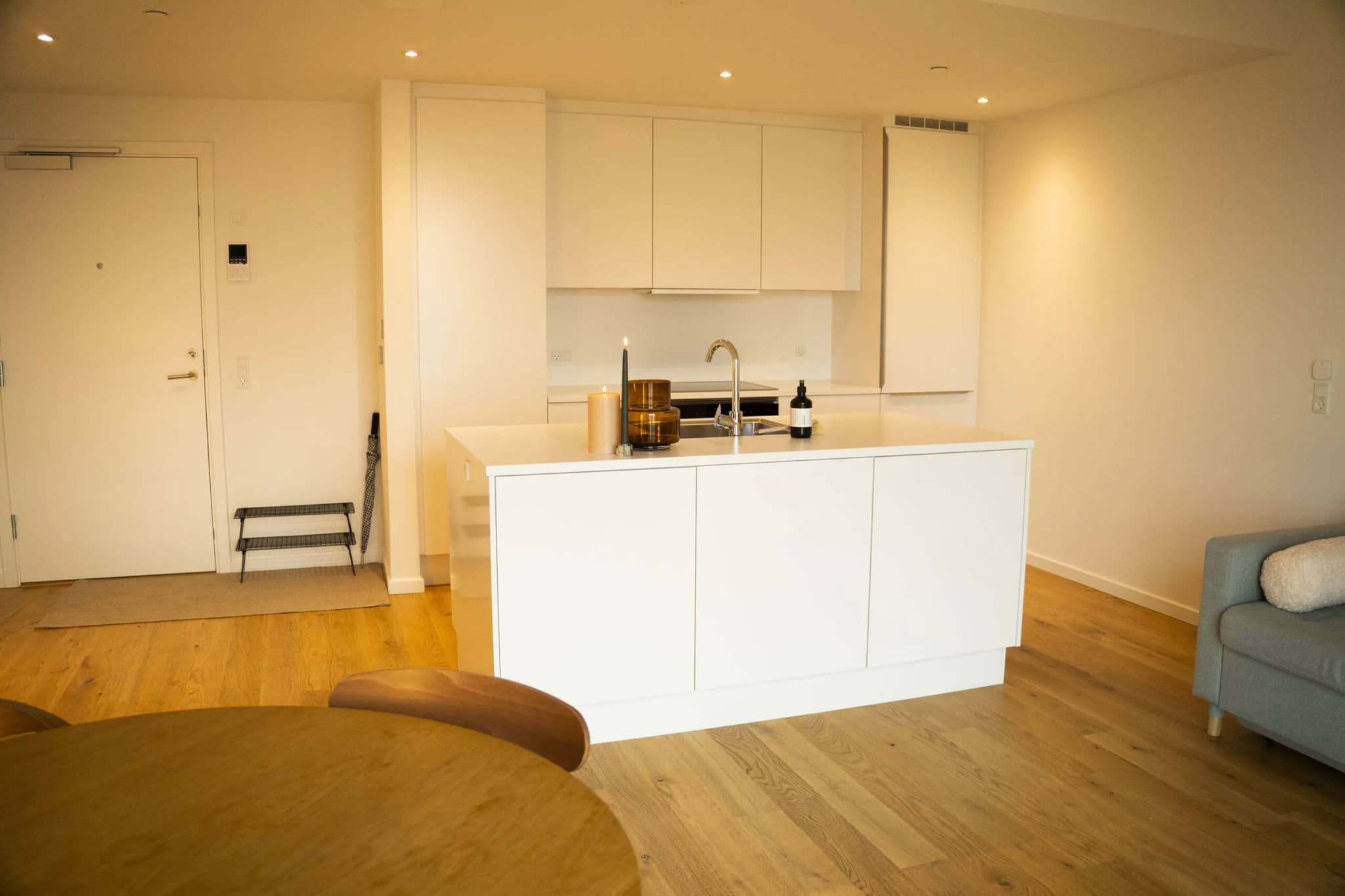
A move-in inspection (indflytningssyn) is a walk-through of the home with the new tenant, where you write down the condition of the home in a move-in report. If you rent out more than one apartment, the inspection is required under § 90 of the Danish Rent Act (lejeloven), and if you skip it, you lose the right to demand normal refurbishment when the tenant moves out. If you rent out only one home, the inspection is voluntary, but the report is still your best evidence.
When is a move-in inspection required?
The rule is in § 90(1) of the Rent Act (in Danish). A landlord who rents out more than one residential apartment must inspect the apartment in connection with the move-in and prepare a move-in report. The new tenant must be invited to the inspection.
What counts is the total number of apartments you rent out. According to the explanatory notes to § 90 in the bill (in Danish), you have the duty whether the apartments are in the same building or in different ones. The notes also go through the typical situations:
| Your situation | Duty to hold a move-in inspection? |
|---|---|
| You rent out one freehold apartment or one co-operative home | No |
| You rent out two or more apartments, also in different buildings | Yes |
| You sublet your own rented home and do not rent out other apartments | No |
| You rent out a single room | No |
| You lease a whole building and rent out the apartments in it | Yes |
If the tenant is unsure how many homes you rent out, the tenant can ask you for a declaration on your honour (tro og love-erklæring) that it is only one. In the authorised lease, standard form A10 (typeformular A10), you tick in § 7 whether you rent out more than one residential apartment and whether the condition of the home will be recorded at a move-in inspection.
You cannot agree your way out of the duty. The rules on inspection, report and defects cannot be waived to the tenant’s disadvantage (§ 93). You may agree that the tenant takes over the home as seen, but then it is precisely the inspection that must show what it looked like.
When do you hold the inspection, and how do you invite the tenant?
The law only says that the inspection must be held in connection with the move-in. According to the explanatory notes, that means shortly before or shortly after the tenant moves in. So there is no fixed number of days. But the more time passes, the harder it becomes to show whether damage was there from the start. So hold the inspection as close to the handover as possible, ideally on the same day the keys change hands.
There are no formal requirements for the invitation either. You decide how to invite the tenant, but the tenant must have enough notice to be able to attend. Send the invitation by email or text message, so you can prove it was sent. On move-out the rules are stricter: there you must invite the tenant in writing with at least one week’s notice (§ 187(3)). You can read more in the guide to move-out inspection and refurbishment.
What should a move-in report contain?
The law sets no formal requirements for the report. It just has to be detailed enough that, years from now, you can both see what the home was like when the tenant took it over. That applies to the interior maintenance (painting, whitewashing, wallpapering and floors) and to the rest of the home, for example installations, doors and windows.
The ministry has made a sample move-in report as appendix 1 to the guidance on move-in and move-out inspections (in Danish). The guidance was written for the previous Rent Act, so its section numbers are the old ones, but the rules on move-in inspections were carried over without changes in substance in 2022. Use the sample as a template, but follow the current law where the guidance is out of date, for example on digital delivery. A good report contains:
- The address, the date and who took part in the inspection.
- Room by room: walls, ceilings, floors, doors, windows, skirting boards and sockets.
- Kitchen and bathroom: appliances, taps and fittings, tiles, grouting and drains.
- When the walls and ceilings were last painted, and whether the home has just been refurbished. If it was freshly painted throughout, write that down. According to the explanatory notes, this very point can often lead to disputes on move-out.
- Photos of every room and of every fault you note. The explanatory notes themselves mention that photo documentation can be used.
- Meter readings for electricity, water and heating, ideally with a photo of each meter.
- Keys, fobs and codes: how many and what for. The tenant must maintain and if necessary renew locks and keys during the tenancy (§ 112(3)), so you both need to know what was handed over.
- Furniture and fittings, if the home is rented out furnished.
Also write down what needs to be fixed, and by whom. The explanatory notes distinguish between two kinds of findings: faults you as the landlord must fix, for example an installation that does not work, and conditions that just need to be noted, so the tenant is not liable for them on move-out. The date of the last painting matters, because the tenant can never be required to hand back the home in better condition than it was in at move-in (§ 187(1)).
Deadlines for the move-in report and the defects list
The report must be handed to the tenant at the inspection. This may be done digitally, for example by emailing it during the inspection and having the tenant sign for it on their phone. If the tenant did not turn up, or will not sign to confirm receipt of the report, you must send it no later than 2 weeks after the inspection (§ 90(2)). If the tenant has opted out of digital communication or is exempt from Digital Post, the report must be handed over on paper (§ 13(1)).
The tenant’s signature is only a receipt. According to the explanatory notes, the report is your proposal for what the home looked like, and you do not have to agree on its content. If the tenant disagrees, the tenant can report defects and ultimately take the matter to the Rent Tribunal (huslejenævnet).
The tenant has 2 weeks from the start of the tenancy to report defects. Otherwise the tenant loses the right to rely on them (§ 91 (in Danish)). The deadline runs from the start of the tenancy, not from the inspection. It does not apply to defects the tenant could not have discovered with ordinary care, or if the landlord has acted fraudulently. Defects already listed in the report count as reported.
| When | Who | What | Rule |
|---|---|---|---|
| Shortly before or after the move-in | Landlord | Holds the inspection and invites the tenant | § 90(1) |
| At the inspection | Landlord | Hands over the report, possibly digitally | § 90(2) |
| No later than 2 weeks after the inspection | Landlord | Sends the report if the tenant was not there or would not sign for it | § 90(2) |
| No later than 2 weeks after the start of the tenancy | Tenant | Reports defects that are not in the report | § 91 |
When the tenant’s defects list arrives
Reply to it, and do so in writing. According to the explanatory notes, your silence can bind you, so the list is accepted in whole or in part, unless you can document that a defect arose later. Conversely, a defect that is neither in the report nor on the list may, depending on the circumstances, be presumed not to have been there at move-in. If you cannot agree on the condition of the home, the Rent Tribunal decides, and it can order you to fix the defect (§ 92).
What happens if there was no move-in inspection?
If you have a duty to inspect and you do not hold the inspection, do not invite the tenant or do not hand over the report, your claim for refurbishment on move-out lapses (§ 90(3)). According to the explanatory notes, this means you cannot demand that the traces of normal use are removed from the parts the tenant must maintain. So you cannot make the tenant pay for painting walls that are simply worn from being lived in.
You can still demand payment for damage the tenant is responsible for. That covers damage from wrong use, wrong maintenance or careless behaviour. But without a report, it is hard to show that the damage was not there from the start. The explanatory notes therefore encourage the landlord to secure evidence that the inspection was held, the tenant invited and the report handed over.
The same logic applies when the tenant moves out. If you have a duty to hold a move-out inspection, the claim also lapses if you do not follow the rules in § 187(3) and (4). And the move-in report is the basis for the whole settlement, because the tenant must hand back the home in the same condition as when the tenant took it over, apart from wear and tear (§ 187(1)). It is also the report you rely on when you settle the deposit and prepaid rent.
Move-in inspection when you rent out only one home
If you rent out only one home, for example your freehold apartment or co-operative home, you have no duty to hold a move-in inspection, and the sanction in § 90(3) does not affect you. Even so, the ministry’s guidance recommends that landlord and tenant in every tenancy go through the home together and write down faults and defects before the tenant moves in.
There is a good reason to follow that advice. When the tenant moves out, you must put forward your claims for refurbishment no later than 2 weeks after the move-out date (§ 187(2)). And you can only demand the home back in the condition it was in at move-in. Without a report and photos, it is your word against the tenant’s about what the home looked like, perhaps several years earlier. The tenant’s 2-week deadline for reporting defects applies to all landlords, you included.
Checklist for the move-in inspection
- Get the home ready. It must be clean, the windowpanes must be whole, and all outer doors must have working locks with keys (§ 89). According to the explanatory notes, it must also be free of pests and mould.
- Agree a time close to the handover, and invite the tenant by email, so you have documentation.
- Bring a report form, or use the ministry’s sample as a template.
- Go room by room with the tenant, and note walls, ceilings, floors, doors, windows, kitchen and bathroom.
- Photograph every room and every fault, so the pictures can be linked to the points in the report.
- Read and photograph the meters for electricity, water and heating.
- Write down the number of keys, fobs and codes, and what they fit.
- Note when the home was last painted, and what you must fix yourself and when.
- Hand over the report on the spot, and have the tenant sign for it. Otherwise send it no later than 2 weeks after the inspection.
- Reply in writing to the tenant’s defects list, and keep the report, photos and correspondence until the tenancy has been settled.
If you would rather not do it yourself, we hold move-in and move-out inspections with written and photo documentation when we handle your long-term rental. If you first need to find the tenant, read about tenant screening.
Sources
- Act on Rent (lejeloven), Act no. 341 of 22 March 2022 as amended (Retsinformation, in Danish)
- Bill on Rent (L 47), explanatory notes to §§ 89-92 (Retsinformation, in Danish)
- Guidance no. 10936 of 21 October 2015 on move-in and move-out inspections, refurbishment and maintenance in private rental properties (Retsinformation, in Danish)
- Standard form A, 10th edition: lease for residential use (Ministry of Social Affairs and Housing, in Danish)
Frequently asked questions
The key questions, answered briefly.

Have another question?Call +45 50 52 15 37 or book a meeting.
Do you need a move-in inspection if you rent out only one apartment?
No. The duty only applies to landlords who rent out more than one residential apartment, see § 90 of the Rent Act. If you own a single freehold or co-operative home, you have no duty to inspect. Even so, the ministry recommends that you go through the home together and write down faults and defects, because that is your evidence of its condition when the tenant moves out.
How long does the tenant have to complain about defects after moving in?
The tenant must report defects no later than 2 weeks after the start of the tenancy, see § 91 of the Rent Act. The deadline runs from the start of the tenancy, not from the inspection. It does not apply to defects that could not be discovered with ordinary care, or if the landlord has acted fraudulently. Defects already listed in the move-in report count as reported.
What happens if the landlord has not made a move-in report?
If a landlord with more than one apartment has not held an inspection, invited the tenant and handed over the report, the claim for refurbishment on move-out lapses, see § 90(3). The landlord then cannot demand that the traces of normal use are fixed, but can still demand payment for damage the tenant is responsible for, for example from wrong use.
Does the tenant have to sign the move-in report?
The tenant only signs to confirm receipt of the report. The signature is not an agreement on the condition of the home, and you do not have to agree on its content. If the tenant disagrees, the tenant can report defects within the 2-week deadline and bring the case before the Rent Tribunal (huslejenævnet). If the tenant will not sign, you send the report no later than 2 weeks after the inspection.
Can the move-in report be sent by email?
Yes. The report can be handed over as a digital document at the inspection, for example by email, with the tenant confirming receipt on the spot. This does not apply if the tenant has opted out of digital communication or is exempt from Digital Post. If the tenant is not present or will not sign, you send the report no later than 2 weeks after the inspection.
How many days after moving in must the inspection be held?
The law does not set a specific number of days. The inspection must be held in connection with the move-in, and according to the explanatory notes, that means shortly before or shortly after. The more time passes, the harder it is to show whether a defect was there from the start, so hold the inspection as close to the handover as possible.